
Background
BrightMind was born from a shared vision among three designers to address pressing educational challenges in Africa, guided by the United Nations' Sustainable Development Goal 4 (Quality Education). Working with Aderhonke Adeyemi and Joyce Ejele, we set out to bridge gaps in access to learning through an innovative AI-powered app concept.
We've all seen or heard stories of children walking miles to school, only to sit in overcrowded classrooms with outdated materials. This reality drove us to ask: How can we ensure these students not only learn but thrive? BrightMind reimagines education by making personalized, adaptive, and accessible learning possible, even in regions with limited connectivity. At its core, it's a response to the struggles faced by millions of students who lack the tools to unlock their potential due to systemic barriers.
Core problem
In Africa, the promise of education is often undercut by harsh realities. Millions of students lack consistent internet access, hindering their ability to engage with online learning resources. In many communities, a single teacher must cater to large numbers of students, making personalized attention impossible. Literacy rates in sub-Saharan Africa, especially among youth and adults, remain below global averages.
Many students face literacy barriers, lack access to trained teachers, and have limited exposure to personalized learning tools. They often juggle household responsibilities, making traditional learning paths harder to follow. The existing education system wasn't adapting to their environment—it expected them to adapt to it, which simply wasn't working.
We realized the solution had to be simple but transformative—something that adapts to their environment, rather than asking them to adapt to it. Offline learning, a voice-first interface, and simple, engaging lesson formats emerged as critical to overcoming these barriers.
Approach & Process
BrightMind's design revolves around three pillars that directly address the barriers we uncovered during research.
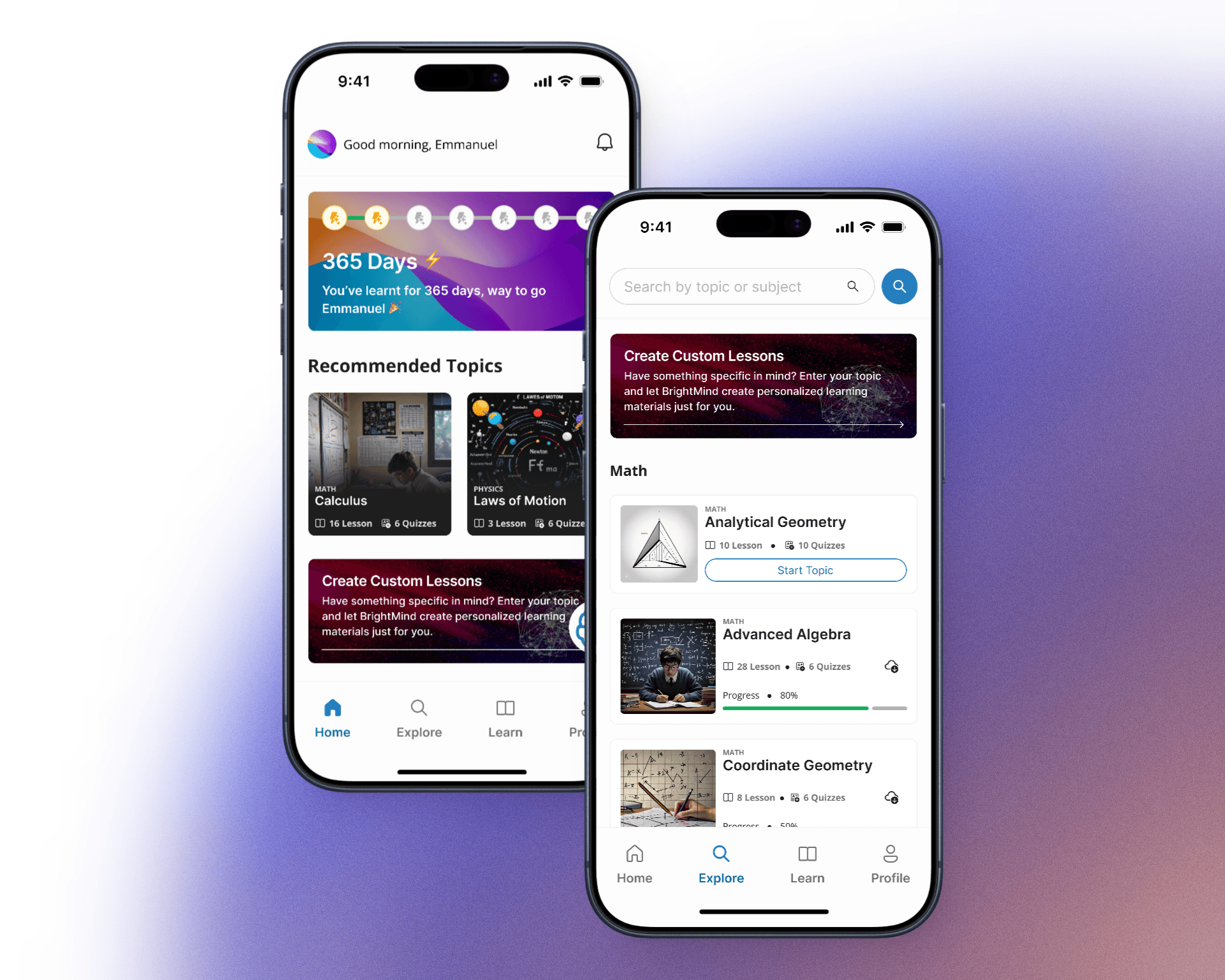
First, offline learning capability. Users can download lessons when they have internet access and continue learning offline, completely removing the dependency on constant connectivity. This ensures students aren't excluded due to unstable internet—a reality for millions across the continent.
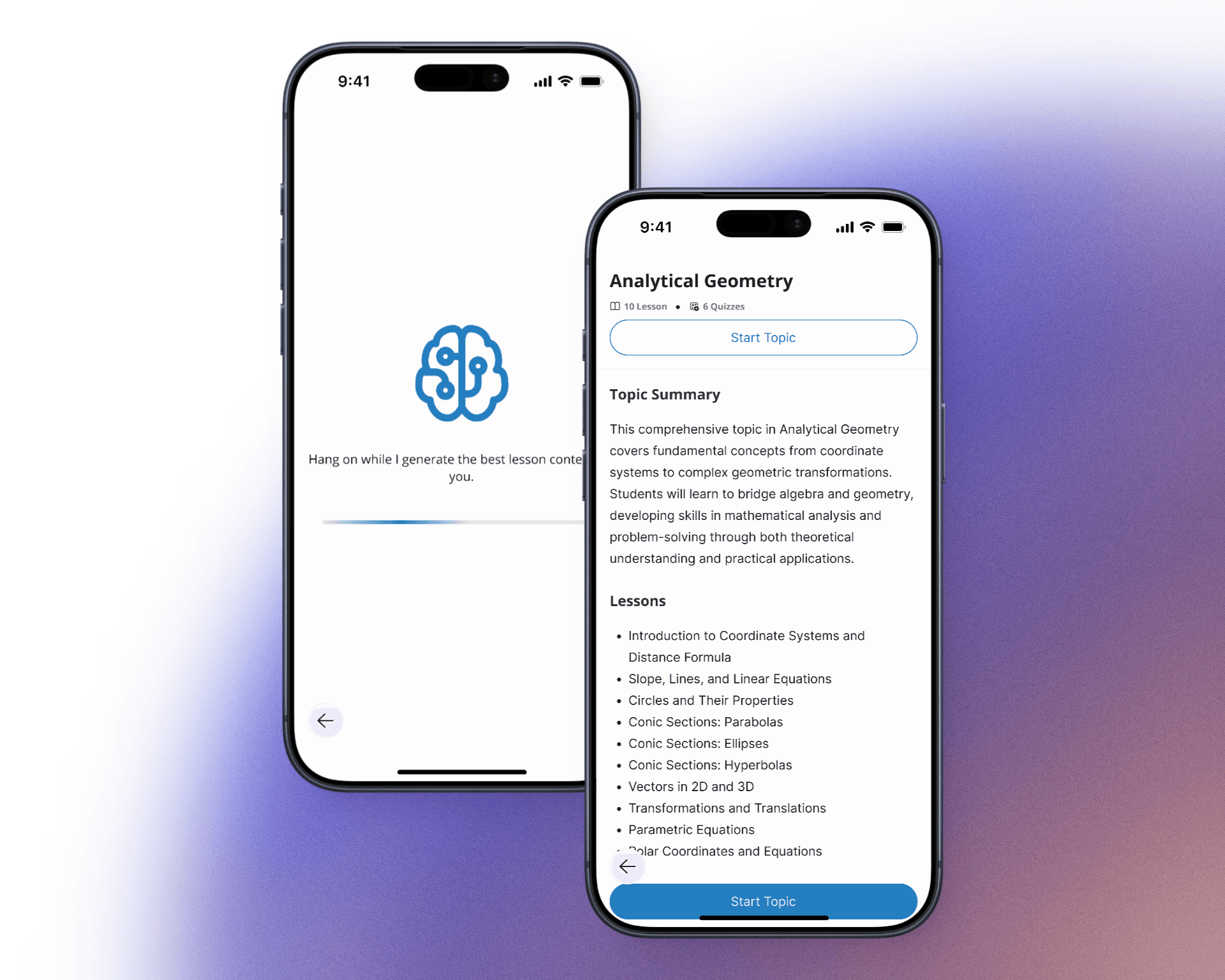
Second, a personalized AI tutor that generates lessons based on the user's topic of choice and learning level, ensuring content feels relevant and manageable. This fills the gap left by teacher shortages, providing each student with adaptive, one-on-one learning experiences that would be impossible in overcrowded classrooms.
Third, a voice-first interface. Recognizing literacy challenges, we incorporated voice commands and audio-based interactions, making the app inclusive for students still building reading skills.
These features weren't chosen arbitrarily—each one was a deliberate response to specific pain points. Our design process involved empathy research, studying educational challenges particularly in Africa to deeply understand the gaps.
One of our biggest lessons was the importance of keeping things simple. Overloading the app with features might make it less accessible to the very people we aim to serve. The interface was designed with clear navigation, engaging visual elements, and interactions that feel natural even for first-time users.
We used Figma for all design and prototyping work, creating a comprehensive design system that could scale across different learning subjects and grade levels. The app was designed mobile-first, acknowledging that phones are often the only digital device accessible to students in rural areas.


Projected Impact
While BrightMind remains a design concept not yet in development, its potential impact is clear. The app could bring quality education to thousands of students in remote areas who currently have no access to personalized learning resources. By providing engaging, adaptive lessons, it could boost literacy rates in pilot communities.
BrightMind could act as a supplemental tool, relieving overburdened teachers and enhancing their effectiveness rather than replacing them. Imagine a student in a rural Nigerian village accessing curated lessons on their phone, progressing at their own pace, and gaining confidence to dream bigger—that's the kind of transformation we envision.
The project demonstrates how design thinking, combined with emerging AI technology, can address real-world challenges in underserved communities. It represents our belief that everyone deserves a chance to learn, and that thoughtful design can help make that possible.
Team: Designed in collaboration with Aderhonke Adeyemi and Joyce Ejele as part of an SDG 4 (Quality Education) initiative.